
CAFFEINE-FREE HERBAL TEA COLLECTION

Sort by:
16 products
16 products
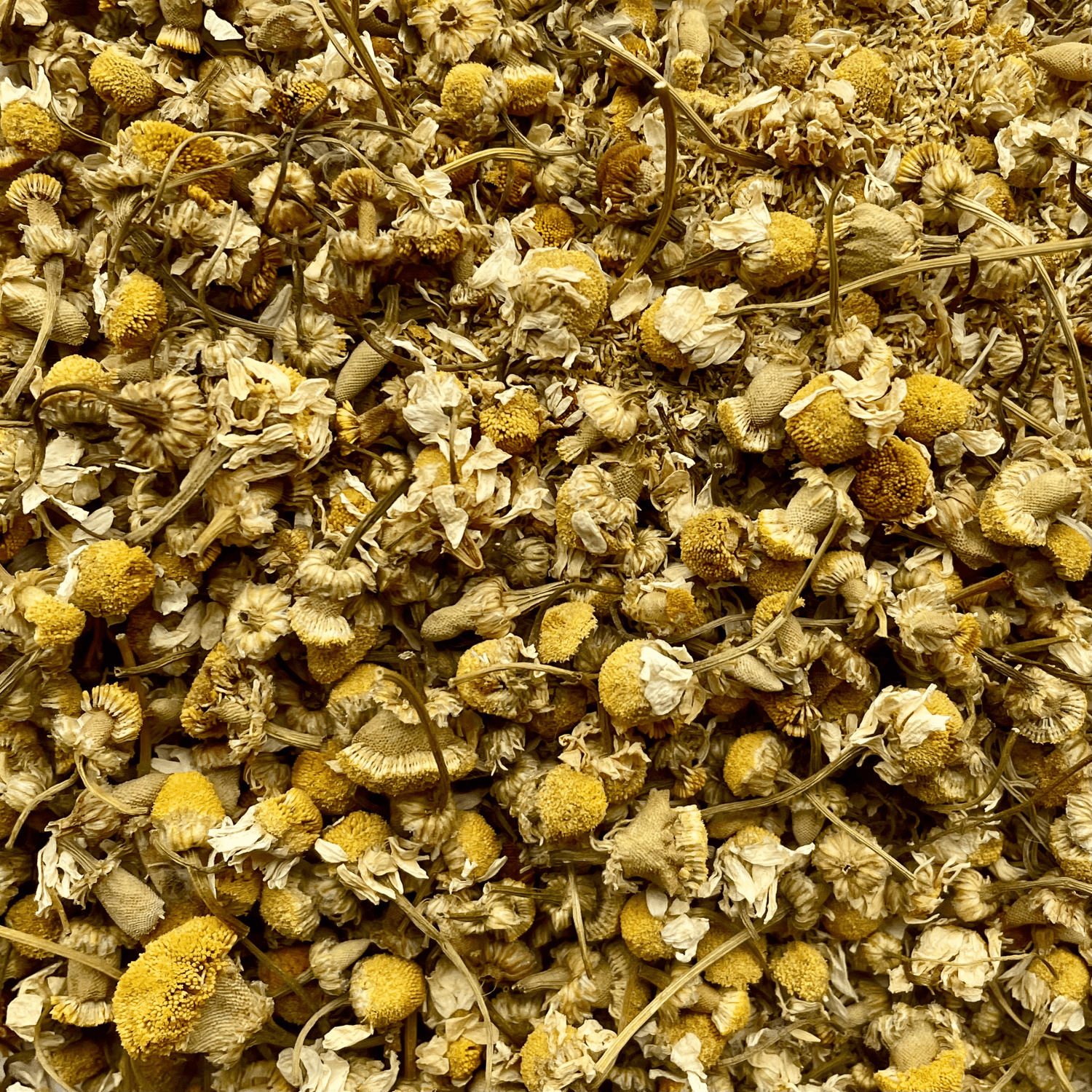

Organic Chamomile
A Gentle Pause at the End of the Day
Some teas are meant to energize.
Others are meant to comfort.
Organic Chamomile belongs firmly in the second category.
Made from whole chamomile blossoms, this naturally caffeine-free herbal tea brews into a golden cup with a delicate floral aroma and a soft sweetness reminiscent of fresh apples and wildflower honey. Light, soothing, and wonderfully calming, it's the kind of tea many people reach for when the day begins to slow down.
Whether enjoyed as part of an evening ritual or simply during a quiet moment of reflection, chamomile offers a comforting reminder that sometimes the simplest things are the most rewarding.
A Tradition of Comfort
For generations, chamomile has been one of the world's most cherished herbal infusions. From European cottage gardens to modern tea cupboards, these beautiful flowers have long been appreciated for their gentle flavour and calming character.
Today, chamomile remains a favorite among those seeking a relaxing, caffeine-free alternative to traditional tea.
Its naturally mellow profile makes it equally enjoyable on its own or paired with a good book, a warm blanket, and a peaceful evening.
Taste Profile
Aroma: Sweet, floral, and inviting
Body: Light and silky
Flavour Notes: Wildflowers, sweet apple, honey, and soft herbal undertones
Finish: Smooth, comforting, and naturally sweet
Why You'll Love It
-
Naturally caffeine-free
-
Beautiful whole chamomile blossoms
-
Delicate floral flavour with hints of apple
-
Perfect for evening enjoyment
-
Delicious served hot or chilled
Brewing Guide
Tea: 3g chamomile flowers
Water: 240ml (1 cup)
Temperature: 100°C (212°F)
Steep Time: 5–7 minutes
For a richer floral character, allow the blossoms to steep a little longer.
The Perfect Evening Companion
There is something timeless about a cup of chamomile.
The gentle aroma, the golden liquor, and the soothing flavour create a sense of calm that feels increasingly valuable in a busy world.
Whether you're winding down after a long day or creating a simple bedtime ritual, Organic Chamomile offers a quiet moment of comfort in every cup.
Slow down.
Take a sip.
And let the day gently fade away.


Some teas comfort you quietly.
Others seem to brighten the entire room.
Organic Elderflower Tea somehow does both.
Delicate yet deeply aromatic, these beautiful blossoms create a tea that feels vibrant, floral, and effortlessly uplifting. Native to Eastern Canada, elderflowers have long been treasured for their gentle character and calming nature, producing a cup that is both soothing and full of life.
The flavour is soft yet remarkably layered—honeyed florals, fresh spring blossoms, and a light sweetness that lingers delicately on the palate. Enjoyed hot, it feels comforting and restorative. Served cold, it becomes bright, refreshing, and beautifully crisp.
This is the kind of tea that naturally slows your breathing.
And somehow makes you smile without trying.
Origin & Tradition
Elderflowers have deep roots in traditional herbal culture across both Northern Europe and North America.
In Northern European folklore, elder trees were often associated with healing, protection, and the quiet belief that they could ward away negative spirits. While legends remain legends, one thing has endured for centuries: people continue returning to elderflower for the feeling it brings—calm, comfort, and lightness.
These blossoms are native to Eastern Canada, where they flourish in cooler climates and develop their beautifully vibrant floral aroma.
Simple flowers, carefully dried, become something unexpectedly special in the cup.
How It Is Made
Organic Elderflower Tea is crafted from carefully harvested elder blossoms, gently dried to preserve their delicate aroma, color, and natural floral sweetness.
Minimal processing allows the flowers to retain their light, expressive character without becoming overly herbal or grassy.
The result is a tea that feels clean and bright rather than heavy, softly floral, naturally soothing, and remarkably refreshing both hot and iced.
Nothing artificial.
Nothing complicated.
Just blossoms, prepared with care.
Taste Profile
Organic Elderflower Tea creates a tea experience that feels floral, vibrant, and beautifully calming.
Aroma
Fresh spring blossoms with soft honeyed sweetness and delicate floral depth.
Flavour
Light-bodied and naturally smooth with layered floral notes, gentle sweetness, and a refreshing herbal softness.
Finish
Clean, bright, and softly lingering with a calming floral aftertaste.
This is a tea that feels like open windows and fresh air.
Brewing Guide
Recommended Preparation
- Tea: 3g / 1 tbsp
- Water: 350ml / 1.5 cups
- Temperature: 90°C / 194°F
- Steep Time: 90–120 seconds
- Serving: Delicious hot or iced
Serve warm for a soothing evening cup or chilled over ice for a refreshing floral infusion during warmer days.
Its vibrant character shines either way beautifully.
Why Tea Lovers Choose Elderflower Tea
People return to Organic Elderflower Tea because it feels uplifting without being overwhelming.
The floral depth, soft sweetness, and naturally calming character create a tea that feels comforting yet refreshingly alive.
For those who enjoy herbal teas with elegance, brightness, and a touch of old-world charm, elderflower becomes more than a simple infusion.
It becomes a small ritual of lightness.
Floral. Vibrant. Restorative.
A tea that quietly brings warmth to the day.


Butterfly Pea Flowers
Some teas taste beautiful.
This one looks magical.
Butterfly Pea Flowers create one of nature's most captivating infusions—a brilliant sapphire-blue tisane that transforms into vivid purple with the simple addition of citrus. Equal parts tea ritual and visual wonder, every cup feels like a small act of alchemy.
Beneath its striking colour lies a surprisingly gentle flavour. Earthy, floral, and softly herbaceous, Butterfly Pea Flower offers a smooth and refreshing cup that can be enjoyed on its own or enhanced with a touch of sweetness and fresh citrus.
Whether served hot, iced, or as the foundation for creative tea blends and cocktails, this vibrant herbal infusion never fails to spark curiosity and delight.
Origin
Our Butterfly Pea Flowers are sourced from a sustainable, female-run farming community in rural Sukhothai, Thailand.
Generations of agricultural knowledge, careful harvesting practices, and a commitment to sustainability help produce flowers of exceptional colour, quality, and freshness.
While not certified organic, these flowers are grown sustainably and without the use of pesticides, allowing the natural beauty of the plant to shine through.
Every cup supports a farming community dedicated to preserving both traditional cultivation methods and economic opportunities for local women.
How It Is Made
Butterfly Pea Flower tea is crafted from the vibrant blossoms of the Clitoria ternatea plant.
After harvesting, the flowers are carefully dried to preserve their rich colour and delicate flavour. No additional ingredients, flavourings, or colouring agents are needed.
The deep blue hue comes naturally from anthocyanins—the same family of pigments found in blueberries and purple cabbage.
When citrus is added, the infusion undergoes a natural pH reaction, transforming from brilliant blue to vivid purple before your eyes.
It's one of the most beautiful tea experiences nature has to offer.
Taste Profile
Aroma
Soft floral notes with gentle earthy undertones.
Flavour
Mild and smooth with delicate floral character, subtle earthiness, and a refreshing finish.
Finish
Clean, light, and pleasantly soothing.
A versatile herbal infusion that pairs beautifully with citrus and natural sweeteners.
Brewing Guide
Recommended Preparation
- Tea: 3–5 flowers
- Water: 240ml / 1 cup
- Temperature: 100°C / 212°F
- Steep Time: 180 seconds
Traditional Serving
Traditionally enjoyed with:
- Brown sugar
- Lime
- Lemon
- Kalamansi
Steep the flowers until the water turns a rich deep blue. Add a few drops of citrus and watch the tea transform into a vibrant purple infusion.
Enjoy hot, iced, or as part of creative beverages and desserts.
Why Tea Lovers Choose Butterfly Pea Flowers
People first discover Butterfly Pea Flowers for the colour.
They return for the experience.
The gentle flavour, stunning visual transformation, and endless versatility make this one of the most unique herbal infusions available.
Perfect for tea lovers, entertainers, home mixologists, and anyone who enjoys a little wonder in their cup.
Floral. Vibrant. Unforgettable.
A tea that turns every brew into a moment of discovery.


Thai Hibiscus Blossoms
Some teas are subtle.
Others make an entrance.
Thai Hibiscus Blossoms do both.
With their deep ruby colour, striking whole flowers, and vibrant tart flavour, these beautiful blossoms create an infusion that is every bit as stunning as it is refreshing. As the flowers unfurl in hot water, they release a brilliant crimson liquor that feels as lively and inviting as it looks.
The flavour is bright and naturally tangy, reminiscent of cranberry, pomegranate, and red berries, balanced by a refreshing acidity that awakens the palate and leaves a clean, crisp finish.
Whether enjoyed steaming hot, poured over ice, or incorporated into creative cocktails and mocktails, hibiscus delivers a tea experience that is impossible to ignore.
Bold, beautiful, and endlessly versatile.
Origin
Our Thai Hibiscus Blossoms are carefully sourced from Thailand, where the warm tropical climate provides ideal growing conditions for producing vibrant, flavourful flowers.
The blossoms are harvested at peak maturity and gently dried to preserve their natural colour, aroma, and refreshing character.
Unlike finely cut herbal blends, these whole blossoms retain their visual beauty, creating a tea experience that begins long before the first sip.
Few herbal infusions are as visually captivating.
Even fewer taste this good.
How It Is Made
Hibiscus tea is crafted from the dried calyces of the hibiscus flower, which are naturally rich in colour and flavour.
After harvest, the blossoms are carefully dried to lock in their vibrant crimson hue and signature tartness.
No flavorings, colorings, or additives are needed.
The flowers themselves provide everything—the colour, the aroma, and the refreshing flavour that have made hibiscus a beloved beverage across cultures for generations.
The result is a pure herbal infusion that feels both refreshing and indulgent.
Taste Profile
Aroma
Bright berry notes, fresh floral character, and subtle citrus-like freshness.
Flavour
Bold and refreshing with flavours reminiscent of cranberry, pomegranate, tart cherry, and red berries.
Finish
Clean, crisp, and pleasantly tangy with a lingering fruity brightness.
A tea that refreshes from the very first sip.
Brewing Guide
Recommended Preparation
- Tea: 4–5 whole flowers
- Water: 350ml / 1.5 cups
- Temperature: 100°C / 212°F
- Steep Time: 120–180 seconds
Enjoy hot for a vibrant herbal infusion or pour over ice for an exceptionally refreshing summer drink.
Cocktail & Mocktail Inspiration
Hibiscus naturally adds brightness, colour, and acidity to beverages, making it a favourite ingredient for creative drinks.
Try using brewed hibiscus tea as:
- A cocktail mixer
- A mocktail base
- An iced tea concentrate
- A sparkling water infusion
- A natural alternative to citrus in select recipes
Its vibrant colour alone makes every glass feel special.
Why Tea Lovers Choose Hibiscus
People are often drawn to hibiscus because of its beauty.
They stay for the flavour.
The striking colour, refreshing tartness, and incredible versatility make it one of the most enjoyable herbal infusions to keep on hand year-round.
Perfect served hot, iced, sweetened, or mixed into creative beverages, hibiscus offers a tea experience that feels both playful and sophisticated.
Bright. Vibrant. Unforgettable.
A flower that transforms every cup into a celebration of colour and flavour.


Organic Peppermint Tea
Few herbs have earned a place in so many homes, gardens, and traditions as peppermint.
One deep breath is often enough to understand why.
Organic Peppermint Tea delivers a remarkably fresh and invigorating experience, filling the cup with a vibrant aroma and a naturally cooling character that feels both uplifting and soothing. Bright, crisp, and exceptionally aromatic, this caffeine-free herbal infusion awakens the senses while encouraging moments of calm.
The first sip offers a rush of refreshing mint, followed by a gentle sweetness and a clean, cooling finish that lingers long after the cup is empty.
Whether enjoyed after a meal, during a quiet evening, or when you're looking for a little extra comfort during the cold season, peppermint remains one of nature's most beloved herbal remedies.
Simple. Refreshing. Timeless.
Origin & History
This Organic Peppermint is sourced from a biodynamic grower in Cascadia, a region renowned for its fertile soils, abundant rainfall, and ideal growing conditions for aromatic herbs.
Peppermint (Mentha × piperita) is a natural hybrid of water mint (Mentha aquatica) and spearmint (Mentha spicata). First cultivated in England during the late seventeenth century, it quickly became one of the most widely enjoyed medicinal and culinary herbs worldwide.
Today, peppermint remains a staple in tea cupboards everywhere thanks to its refreshing flavour, naturally cooling sensation, and remarkable versatility.
This particular peppermint offers exceptional aromatic intensity, creating a cup that feels vibrant from the moment it begins to steep.
How It Is Made
The peppermint leaves are carefully harvested at peak freshness and gently dried to preserve their natural essential oils and distinctive aroma.
Minimal processing allows the herb to retain its bright flavour, cooling properties, and vibrant character.
The result is a pure herbal infusion that showcases peppermint exactly as nature intended.
No additives.
No flavourings.
Just premium peppermint leaves and their naturally refreshing qualities.
Taste Profile
Aroma
Fresh mint leaves, cool mountain air, and bright herbal sweetness.
Flavour
Bold peppermint with vibrant cooling notes, refreshing herbal character, and subtle natural sweetness.
Finish
Clean, crisp, and lingering with a soothing cooling sensation.
A tea that feels refreshing from the inside out.
Brewing Guide
Recommended Preparation
- Tea: 1 tbsp peppermint
- Water: 240ml / 1 cup
- Temperature: 100°C / 212°F
- Steep Time: 5–7 minutes
Enjoy hot for a comforting herbal infusion or serve over ice for a naturally refreshing caffeine-free drink.
Why Tea Lovers Choose Peppermint
Organic Peppermint Tea has remained a favourite for generations because it offers something few herbs can match—a balance of energy and relaxation.
The cooling aroma feels invigorating, while the infusion's soothing nature encourages moments of calm and restoration.
Many people enjoy peppermint tea after meals, on stressful days, or as a comforting herbal companion during seasonal changes.
Its versatility, refreshing flavour, and naturally caffeine-free character make it one of the most useful herbal teas to keep on hand.
Bright. Cooling. Revitalizing.
A classic herbal tea that never goes out of style.


Organic Earl Grey Rooibos
A classic Earl Grey experience—without the caffeine.
Organic Earl Grey Rooibos is a beautifully fragrant blend of rich South African red rooibos and bright citrus bergamot, creating a smooth, comforting cup that feels both familiar and wonderfully relaxing. It offers all the elegance of traditional Earl Grey with the added warmth and softness of naturally caffeine-free rooibos.
Perfect for evening rituals, cozy afternoons, or any time you want the comfort of Earl Grey without the stimulation of black tea, this blend is smooth, aromatic, and effortlessly easy to love.
With every sip, you’ll experience gentle citrus brightness, soft floral notes, and the naturally sweet, rounded body that makes rooibos one of the world’s most comforting herbal teas. This caffeine-free rooibos tea is a comforting alternative to traditional black tea. Crafted from premium organic rooibos and natural bergamot flavour, this herbal tea delivers the classic Earl Grey character tea lovers enjoy while offering a smooth and naturally sweet finish.
Origin
This blend begins with premium organic red rooibos from South Africa, where rooibos has been traditionally grown for generations in the unique climate of the Cederberg region.
Known as “red bush tea,” rooibos comes from the Aspalathus linearis plant, native only to this region. Its naturally smooth body, mild earthy sweetness, and caffeine-free nature make it the perfect base for elegant blends like Earl Grey Rooibos.
The tea is then thoughtfully blended in Richmond, BC, combining organic rooibos with organic bergamot flavour to create the signature citrus brightness and floral aroma of classic Earl Grey.
Blending locally allows greater control over freshness, consistency, and flavour balance—creating a tea that feels both classic and beautifully refined.
Contains
- Organic Rooibos
- Organic Bergamot Flavour
Simple, clean ingredients that create a naturally aromatic and comforting tea experience.
How It Is Made
Rooibos is harvested from the fine needle-like leaves of the Aspalathus linearis shrub and gently bruised after picking to begin natural oxidation.
This oxidation process transforms the leaves into their signature deep amber-red colour while developing rooibos’ smooth body, soft sweetness, and naturally mellow finish.
The leaves are then carefully dried under the African sun, preserving their warmth and rich flavour.
Once in Richmond, BC, the rooibos is blended with organic bergamot flavour, adding the bright citrus lift and delicate floral notes that make Earl Grey so timeless and loved.
Unlike traditional Earl Grey made with black tea, this rooibos version offers the same refined bergamot aroma in a softer, naturally caffeine-free cup that can be enjoyed any time of day.
Taste Profile
Organic Earl Grey Rooibos creates a tea experience that feels warm, smooth, and quietly luxurious.
Aroma
Bright bergamot citrus layered over soft vanilla-like rooibos warmth.
Flavour
Naturally sweet rooibos with smooth earthy depth, balanced by fresh citrus brightness and gentle floral Earl Grey notes.
Finish
Clean, mellow, and lingering with a soft citrus warmth that stays beautifully on the palate.
This is a tea that feels comforting without heaviness—familiar, elegant, and easy to return to every day.
Brewing Guide
Recommended Preparation
- Tea: 1 heaping teaspoon per cup
- Water: Hot water just under boiling (180–190°F / 82–88°C)
- Steep Time: 2–3 minutes
- Infusions: Multiple steeps possible
Because rooibos lacks the bitterness of traditional tea leaves, they remain smooth and forgiving as it develops even more sweetness and body.
Enjoy it plain, with milk, or lightly sweetened for a richer Earl Grey-style experience.
Why Tea Lovers Choose Earl Grey Rooibos
Organic Earl Grey Rooibos is chosen for the comfort of tradition without caffeine.
It offers the familiar elegance of classic Earl Grey, but with the softness, warmth, and gentle sweetness of rooibos—making it ideal for evenings, winding down, or anyone looking for a naturally caffeine-free alternative.
It is the tea people reach for when they want calm without compromise.
Smooth. Bright. Comforting.
A classic reimagined for everyday peace.


About
An organic rooibos base from South Africa spiced with all the good stuff.
A cozy, smooth chai without the caffeine.
Origin
Blended in Richmond, BC
Ingredients:
Organic rooibos, organic chai blend (cinnamon, star anise, cardamom, pepper, ginger, cloves, nutmeg).


About
There's nothing quite like the rich, pure, and naturally sweet flavour of Red Rooibos.
Like many herbal teas, Rooibos is known to boast a wide variety of health benefits. Most commonly, it's recognized for being:
- Loaded with antioxidants
- Rich in minerals such as calcium, iron, potassium, copper, manganese, magnesium, and zinc.
You'll often find Red Rooibos as the base for many fantastic herbal tea blends, because its flavour is mild, sweet, and complimentary to many other herbal ingredients.
Recommendations
- Tea: 3g / 1 tbsp
- Water: 200ml / 0.85 cups
-
Temperature: 95°C / 203°F
- Steep: 240 seconds
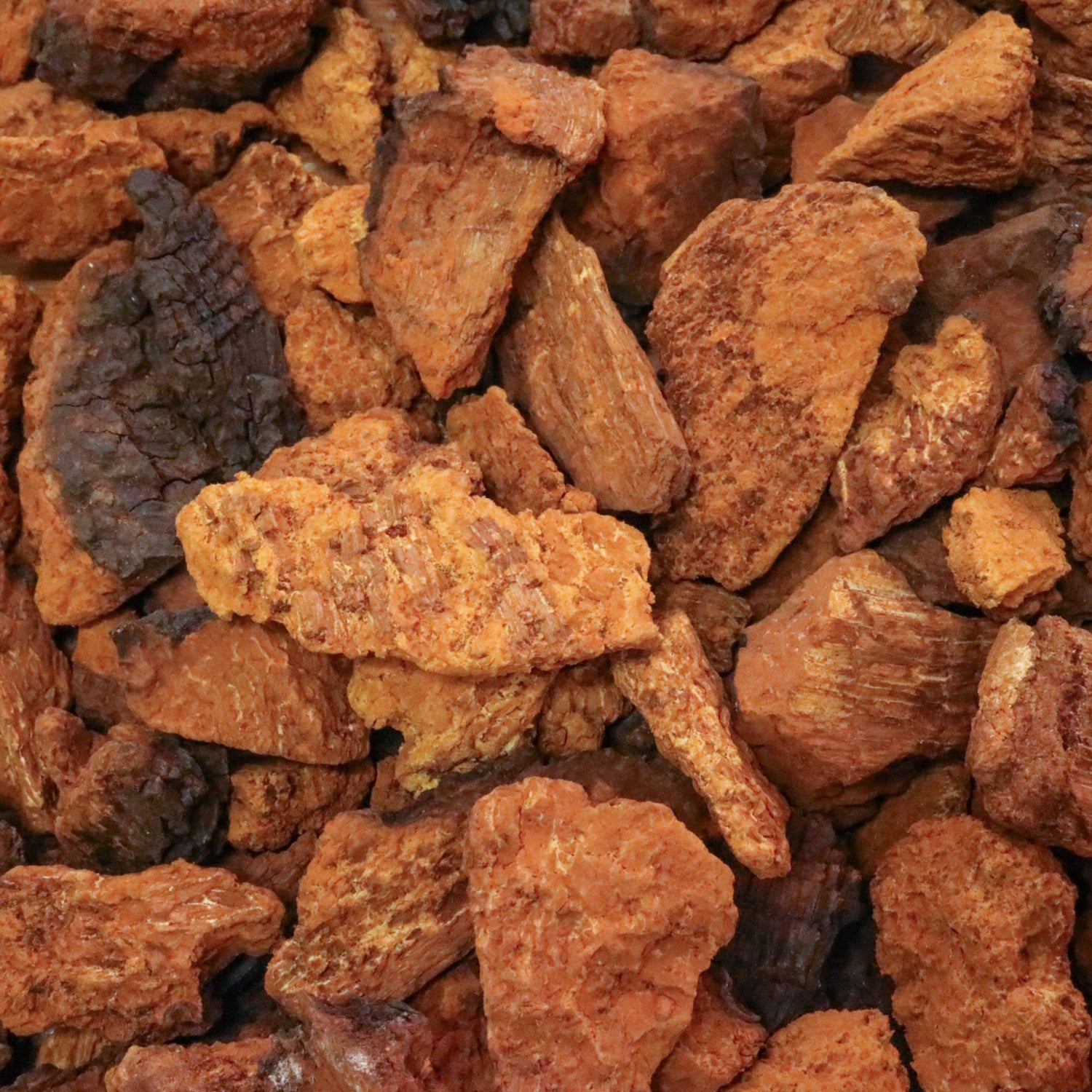
Wild Crafted Chaga
Deep, Earthy, and Traditionally Brewed
Harvested from birch forests in Quebec, Canada, our Wild Crafted Chaga offers a rich, dark infusion with remarkable depth and character. Often referred to as the “King of Mushrooms,” Chaga has been enjoyed for generations across northern forests where long winters and rugged landscapes shaped a culture of nourishing, slow-brewed beverages.
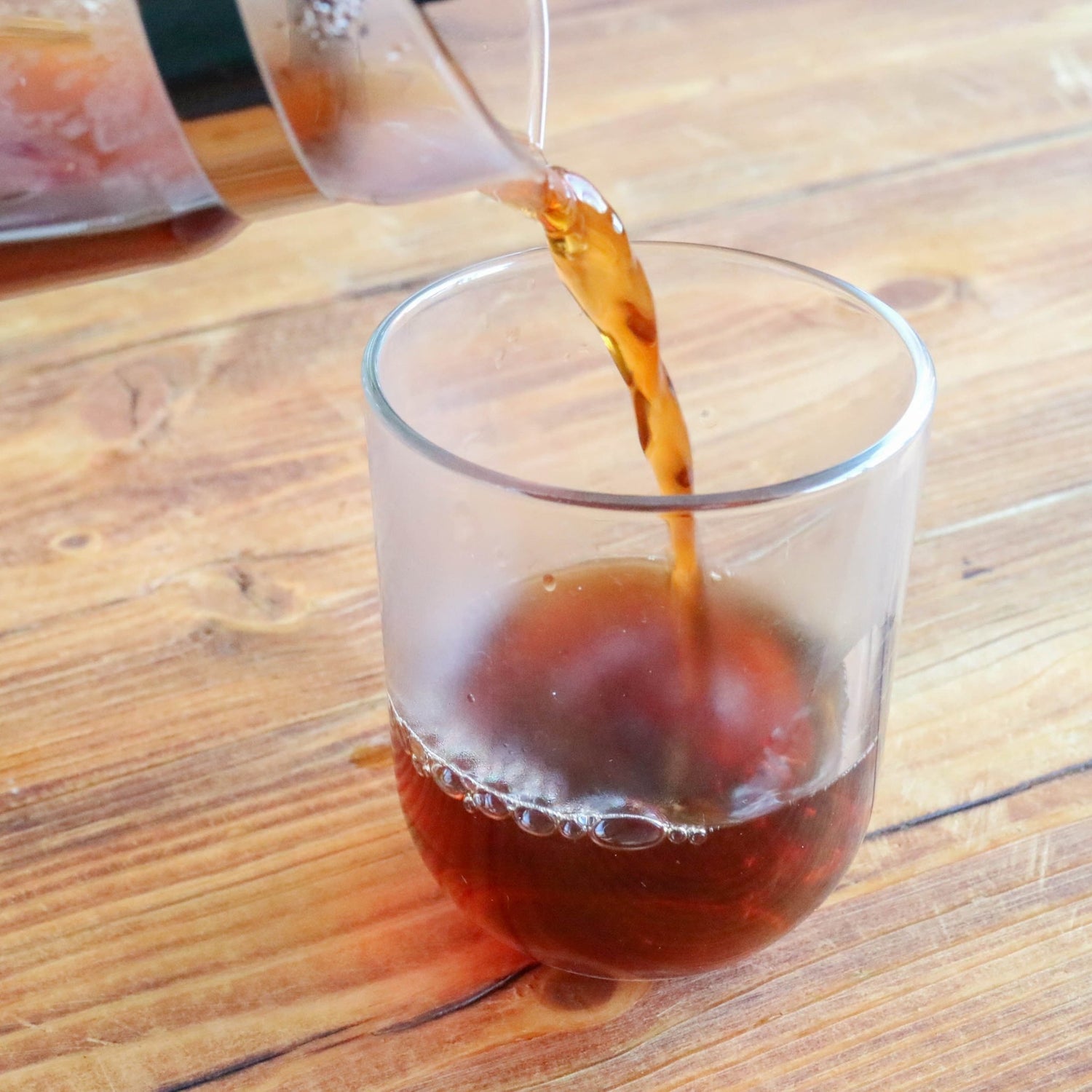
Unlike delicate herbal teas, Chaga brews into a bold cup with notes reminiscent of roasted cacao, forest woodlands, and mild coffee. The result is comforting, caffeine-free, and satisfying any time of day.
Whether you're exploring functional mushrooms or simply searching for a flavourful alternative to coffee, Chaga delivers a uniquely grounding experience.
Origin
Our Chaga (Inonotus obliquus) is sustainably wild-harvested from birch trees in Quebec, Canada.
Growing naturally throughout the circumboreal forests of the Northern Hemisphere, Chaga has a long history of use in Siberia, Scandinavia, Eastern Europe, and northern Indigenous traditions, where it was commonly prepared as a slow-simmered decoction.
What Makes Chaga Unique?
Unlike culinary mushrooms, Chaga grows as a dense, dark conk on living birch trees. Over many years, it has developed a concentrated profile of naturally occurring compounds, which has made it the subject of growing scientific interest.
Today, Chaga is appreciated by tea lovers, mushroom enthusiasts, and wellness-minded drinkers for its rich flavour, traditional heritage, and naturally caffeine-free character.
Taste Profile
Aroma: Earthy, woody, and slightly sweet
Body: Full-bodied and smooth
Flavour Notes: Roasted cacao, birch forest, mild vanilla, and subtle coffee-like richness
Finish: Clean, warming, and pleasantly lingering
Brewing Guide
Traditional Chaga Tea
-
10g Chaga per 1 litre water
-
Simmer gently for 2 hours.
-
Strain and enjoy
Short on time? A gentle rolling boil for approximately 20 minutes will still produce a rich, flavourful infusion.
One of Chaga's most remarkable qualities is its reusability. The same pieces can often be brewed three to four additional times while continuing to produce a satisfying cup.
Continuous Simmer Method
For a traditional northern-style preparation, keep a pot gently simmering throughout the day, topping up with water as needed. This method creates an ongoing supply of rich Chaga tea and extracts maximum flavour from each batch.
Why Tea Drinkers Love Chaga
-
Naturally caffeine-free
-
Rich, dark flavour similar to coffee
-
Traditionally enjoyed throughout northern cultures.
-
Reusable for multiple brews
-
Excellent as a standalone beverage or blended with other herbs and spices
A Forest Tradition in Every Cup
Some teas refresh. Others energize. Chaga does something different.
It invites you to slow down.
From the birch forests of Quebec to your favourite mug, this wild-crafted mushroom creates a deeply comforting brew that feels equally at home on a cold winter morning or a quiet evening indoors.
Simple, earthy, and timeless—this is one of the most distinctive infusions nature has to offer.


About
The simplest thing we can say about chaga (Inonotus obliquus | чага in Russian) is that it's our favourite mushroom, and we drink it because the rich, dark brew is delicious.
Popular among 'superfood' and 'elixir' enthusiasts, a Google search will reveal a wide variety of literature about chaga's health benefits. Though many of those articles don't seem to be based on solid data, a decent number are peer-reviewed articles from very credible sources.
Origin & History:
We source our chaga from some good friends in Quebec, Canada.
Chaga grows mostly on birch, in Circumboreal forests. A chaga 'tea' (or extraction) is a traditional drink in Siberia and some parts of Scandinavia.


Blue Matcha Earl Grey
A vibrant twist on a timeless classic.
Blue Matcha Earl Grey is a visually stunning and beautifully aromatic blend that transforms teatime into a full sensory experience. Made from 100% micro-milled butterfly pea flowers and generously scented with exceptional cold-pressed bergamot oil from Calabria, Italy, this tea offers the bright citrus elegance of Earl Grey with an unexpected, vibrant blue infusion.
Smooth, floral, citrusy, and naturally caffeine-free, this blend is both a visual and gustatory delight—bold in colour, delicate in flavour, and almost too beautiful to drink.
Almost.
This is Earl Grey reimagined with colour, creativity, and pure joy in every cup.
What Is Blue Matcha?
Despite the name, Blue Matcha is not traditional green matcha.
Traditional matcha is made from finely stone-ground green tea leaves known as tencha. Blue Matcha, however, is created from 100% micro-milled butterfly pea flowers, producing an ultra-fine, whiskable powder with a naturally brilliant blue colour.
The result is a vibrant botanical tea that looks like matcha, whisks like matcha, and creates a rich, smooth cup—but without caffeine or the grassy flavour of green tea.
It is bright, floral, naturally calming, and wonderfully unique.
Origin
This blend begins with premium butterfly pea flowers, carefully micro-milled into a smooth, vivid blue powder that dissolves beautifully into water for a silky, visually striking cup.
To elevate the experience, it is generously scented with exceptional bergamot oil sourced from Calabria, Italy, one of the world’s most celebrated regions for producing high-quality bergamot.
Cold-pressed into what can only be described as liquid gold, this bergamot oil brings bright citrus sparkle, floral elegance, and a truly luxurious aromatic finish.
The final blend is thoughtfully crafted in Richmond, BC, ensuring freshness, consistency, and the perfect balance of vibrant colour and fragrant citrus character.
The result is a tea that feels both playful and refined.
How It Is Made
Butterfly pea flowers are carefully harvested, dried, and finely micro-milled into an ultra-smooth powder that can be whisked just like traditional matcha.
This fine texture allows the tea to blend evenly into water, creating a rich blue infusion with a soft, velvety body and beautiful presentation.
The powder is then blended in Richmond, BC, with premium cold-pressed bergamot oil from Calabria, Italy. This fragrant citrus oil adds to the unmistakable bright, sunny aroma of classic Earl Grey while enhancing the floral softness of butterfly pea flower.
Unlike artificial flavoured teas, this blend focuses on freshness, aroma, and natural beauty—creating a cup that is as enjoyable to prepare as it is to drink.
Taste Profile
Blue Matcha Earl Grey creates a tea experience that feels bright, floral, and beautifully uplifting.
Aroma
Fresh Bergamot Citrus with soft floral notes and a sunny, elegant brightness.
Flavour
Smooth, delicate butterfly pea flower with vibrant citrus lift and gentle floral sweetness.
Finish
Clean, refreshing, and lightly lingering with a soft Earl Grey-inspired finish.
This is a tea that delights both the eyes and the palate—light, joyful, and unforgettable.
Brewing Guide
Recommended Preparation
- Tea: 1 tsp blue matcha powder
- Water: 240ml / 1 cup
- Temperature: Hot water, not boiling (around 80°C / 176°F)
- Preparation: Whisk until smooth and frothy
For an even more dramatic experience, add lemon and watch the colour shift naturally from brilliant blue to vibrant purple.
Enjoy hot, iced, or as a beautiful latte.
Why Tea Lovers Choose Blue Matcha, Earl Grey
Blue Matcha Earl Grey is chosen for its beauty, creativity, and joyful tea ritual.
It offers the elegance of Earl Grey in a completely new form—vibrant blue, naturally caffeine-free, and full of bright citrus fragrance.
Perfect for slow mornings, afternoon creativity, or serving something unforgettable to guests, this tea turns ordinary tea moments into something magical.
Bright. Beautiful. Unexpected.
A tea experience designed to be remembered.


Dream Herbal Tea Blend
Some teas are meant to wake you up.
This one was made to help you slow down.
Dream is a whimsical caffeine-free herbal blend that combines the enchanting beauty of butterfly pea flowers, the gentle floral character of lavender, and the refreshing calm of mint. Together, these botanicals create an infusion that feels both soothing and playful—a tea that delights the senses before the first sip.
As the tea steeps, the water transforms into a mesmerizing deep blue. Add a few drops of citrus, and watch as the colour shifts into a brilliant violet-purple right before your eyes.
It's part tea ritual.
Part natural wonder.
And entirely unforgettable.
A Blend Inspired by Quiet Evenings
Dream was created for moments when the pace of the day begins to soften.
The floral elegance of lavender brings a gentle aromatic sweetness, while mint adds a refreshing brightness that lifts and balances the blend. Butterfly pea flowers contribute subtle earthy notes and remarkable colour, creating a cup that is as beautiful as it is enjoyable.
The result is smooth, light, and naturally caffeine-free—perfect for evening rituals, cozy reading sessions, or simply creating a few peaceful moments in your day.
Crafted with Beautiful Botanicals
Butterfly Pea Flowers
Butterfly pea flowers have long been enjoyed throughout Southeast Asia for their striking natural colour and delicate flavour.
We source our whole butterfly pea flowers from a sustainable, female-run farming community in rural Sukhothai, Thailand, supporting traditional agriculture and local economic empowerment.
Lavender
Lavender contributes a soft floral aroma and an elegant herbal sweetness, giving the blend its calming character.
Mint
Refreshing and cooling, mint brings balance and brightness, creating a clean finish that keeps the blend lively and refreshing.
Together, these ingredients create a harmonious infusion that feels both comforting and uplifting.
Taste Profile
Aroma
Fresh lavender blossoms, cool mint, and delicate floral notes.
Flavour
Soft floral sweetness balanced by refreshing mint and gentle earthy undertones.
Finish
Clean, smooth, and soothing with lingering botanical freshness.
A cup that feels calm without being heavy.
The Colour-Changing Experience
One of Dream's most enchanting qualities is its natural colour transformation.
Steeped on its own, the tea brews a vivid sapphire-blue colour thanks to the butterfly pea flowers.
Add a squeeze of lime or lemon, and the infusion instantly transforms into vibrant shades of purple and violet.
No artificial colours.
No additives.
Just one of nature's most beautiful little surprises.
Brewing Guide
Recommended Preparation
- Tea: 3g
- Water: 300ml
- Temperature: 100°C / 212°F
- Steep Time: 3–5 minutes
For the full colour-changing experience, add a few drops of fresh lime or lemon juice after brewing.
Delicious served hot or iced.
Why Tea Lovers Choose Dream
Dream offers something rare—a tea that is both calming and captivating.
Its beautiful colour, naturally caffeine-free ingredients, and balanced flavour make it a favorite among herbal tea lovers seeking something a little different.
Whether you're winding down in the evening, entertaining guests, or simply treating yourself to a moment of beauty, Dream transforms an ordinary cup of tea into an experience.
Floral. Magical. Serene.
A botanical blend designed to slow the world down for a little while.


About
If you like turmeric... try this!
We sourced turmeric with the highest concentration of curcumin we could find, grown in the Andes, to provide a super solid base for this tea. Blended with Peruvian maca, mushroom extracts, and chai spices, this blend is sure to make you glow like the sun.
Origin
Blended in Richmond, BC
Recommendations
Try it in your next latte! We like it best with coconut milk.
Ingredients
Organic turmeric powder, organic maca powder, organic lion’s mane extract, organic tremella extract, organic cinnamon, organic ginger, organic cardamom, organic pepper, organic star anise.
____________
More on Turmeric
Latin name: Curcuma longa
Turmeric is a flowering plant, native to Asia. Ayurveda (a system of medicine with roots in ancient India) has treasured turmeric over literally thousands of years; conveniently, this widespread plant is also a widespread ingredient in Asian cooking.
In recent times, turmeric has also become one of the most sought-after nutritional supplements in North America.
Why should you include it in your diet?
A Google search for ‘turmeric benefits’ will yield a wild range of claims, some of them well-founded. To keep things down to earth and transparent, we choose to say that we (at Two Hills) consume turmeric regularly, because according to Health Canada:
- (Traditionally) used in Herbal Medicine as an anti-inflammatory to help relieve joint pain
- Used in Herbal Medicine as a hepatoprotectant (liver protectant)
- Source of antioxidants
- Used in Herbal Medicine to aid digestion, increase bile excretion by the liver and stimulate the gallbladder
- Used in Herbal Medicine to aid digestion
- (Traditionally) used in Herbal Medicine to help relieve flatulent dyspepsia
- Used in Traditional Chinese Medicine (TCM) to eliminate blood stasis, promote the flow of qi, relieve pain of menstruation due to blood stasis
Source: http://webprod.hc-sc.gc.ca/nhpid-bdipsn/atReq.do?atid=turmeric.oral.curcuma.orale&lang=eng
Should you be a scholarly geek (as we are), we recommend the following article:
Turmeric and curcumin: Biological actions and medicinal applications. CURRENT SCIENCE, VOL. 87, NO. 1, 10 JULY 2004. Ishita Chattopadhyay1 , Kaushik Biswas1 , Uday Bandyopadhyay2 and Ranajit K. Banerjee1
____________
More on Lion's Mane
Latin name: Hericium erinaceus
Lion’s mane is an edible and medicinal mushroom native to all continents in the Northern hemisphere; it is also known as monkey head mushroom, bearded tooth mushroom, satyr's beard, bearded hedgehog, and a variety of local names. Long known to traditional healers, particularly in relation to brain and nerve health, this mushroom’s popularity soared recently among modern health food seekers.
The following articles (related to this mushroom) are available at the website of the US National Library of Medicine. Please note the section about neurite outgrowth and regeneration of damaged nerves in the first one.
- Neuronal Health – Can Culinary and Medicinal Mushrooms Help?https://www.ncbi.nlm.nih.gov/pmc/articles/PMC3924982/
- Therapeutic Potential of Hericium erinaceus for Depressive Disorder. https://www.ncbi.nlm.nih.gov/pmc/articles/PMC6982118/
- Gastroprotective Effects of Lion's Mane Mushroom Hericium erinaceus(Bull.:Fr.) Pers. (Aphyllophoromycetideae) Extract against Ethanol-Induced Ulcer in Rats
https://www.ncbi.nlm.nih.gov/pmc/articles/PMC3835629/
____________
More on Tremella Mushroom
Latin name: Tremella fuciformis
Tremella is a mushroom that mostly grows in tropical regions; it is very popular in Chinese cooking and medicine. In China, it is known as 银耳 (silver ear) or 雪耳
(snow ear); in Japan, it is known as シロキクラゲ (white jellyfish).
Tremella, with its high content of Vitamin D and beta-glucans, recently shot to stardom among health food enthusiasts in the West. The following articles (related to this mushroom) are available at the website of the US National Library of Medicine.
- The Neuroprotective and Neurotrophic Effects of Tremella fuciformis in PC12h Cells
https://www.ncbi.nlm.nih.gov/pmc/articles/PMC3763079/ - The anti-fatigue and anti-anoxia effects of Tremella extract
https://www.ncbi.nlm.nih.gov/pmc/articles/PMC6923490/ - Immunomodulatory Effect of Tremella Polysaccharides against Cyclophosphamide-Induced Immunosuppression in Mice
https://www.ncbi.nlm.nih.gov/pmc/articles/PMC6017040/


About
Your favourite spiced chai, elevated with powerful Peruvian maca.
Ingredients:
Organic maca powder, organic cinnamon, organic ginger, organic cardamom, organic pepper, organic star anise
____________
More on Maca
Latin name: Lepidium meyenii
Maca, sometimes called ‘Peruvian ginseng’, is a native plant of the Andean highlands, growing mostly at altitudes over 4000m above sea level. In recent years, maca achieved super-stardom in North America, boosted by reviews from influencers like David Asprey (Hack your Sex Drive with Maca Root | https://blog.daveasprey.com/hack-your-sex-drive-with-maca/) and Men’s Health Magazine (Can Maca Powder Boost Your Energy and Sex Drive? Here's What You Should Know
https://www.menshealth.com/nutrition/a19544647/maca-powder-benefits/)
Why should you include it in your diet? Quoting Health Canada on benefits that have been solidly established:
- Source of/Provides antioxidants.
- Helps to support emotional aspects of sexual health.
- Helps to support healthy mood balance during menopause.
Source: http://webprod.hc-sc.gc.ca/nhpid-bdipsn/atReq.do?atid=maca.lepidium.meyenii&lang=eng
And for scholarly geeks, we recommend the following articles:
- Ethnobiology and Ethnopharmacology of Lepidium meyenii (Maca), a Plant from the Peruvian Highlands
-
Hormone-Balancing Effect of Pre-Gelatinized Organic Maca (Lepidium peruvianum Chacon): (I) Biochemical and Pharmacodynamic Study on Maca using Clinical Laboratory Model on Ovariectomized Rats
https://www.ncbi.nlm.nih.gov/pmc/articles/PMC3614604/ -
Preservation of Cognitive Function by Lepidium meyenii (Maca) Is Associated with Improvement of Mitochondrial Activity and Upregulation of Autophagy-Related Proteins in Middle-Aged Mouse Cortex
https://www.ncbi.nlm.nih.gov/pmc/articles/PMC5018343/


About
100% micro-milled Thai hibiscus flowers sourced from a sustainable, female-run community in rural Thailand.
Rest assured your tea is made with loving, experienced hands.
Ingredients
Micro-milled hibiscus powder
Note:
This product is grown sustainably and without the use of pesticides – but is not certified organic.


A Cup of Wonder, Colour, and Creativity
Some drinks are enjoyed for their flavour.
Others are remembered for how they make you feel.
Blue Matcha belongs to a rare category that does both.
Made from finely micro-milled butterfly pea flowers, this vibrant botanical powder transforms water into a brilliant sapphire-blue infusion that feels almost magical. Delicate, earthy, and naturally caffeine-free, it offers a unique drinking experience that is equal parts beauty and ritual.
Add a squeeze of lemon or lime and watch the deep blue transform into a vivid violet before your eyes.
Whether enjoyed as a latte, tea, smoothie, cocktail, or culinary ingredient, Blue Matcha brings a sense of playfulness and creativity to every cup.
Natural beauty, transformed by nature itself.
Origin
Our Blue Matcha is sourced from a sustainable, female-run farming community in rural Thailand.
For generations, butterfly pea flowers have been cultivated throughout Southeast Asia, where they are traditionally enjoyed as herbal infusions and natural food colorants.
Each flower is carefully harvested, dried, and micro-milled into a silky powder that preserves its striking colour and delicate character.
While not certified organic, this product is grown sustainably and without pesticides.
The result is a beautiful botanical ingredient crafted with care, experience, and respect for the land.
How It Is Made
Blue Matcha begins with whole butterfly pea flowers.
After harvest, the blossoms are carefully dried and then finely micro-milled into an ultra-smooth powder.
Unlike traditional teas, there is no oxidation, roasting, or fermentation involved.
This minimal processing helps preserve the flower's vibrant pigments, natural flavour, and versatility.
The result is a brilliantly coloured powder that dissolves easily into water and blends seamlessly into beverages and recipes.
Taste Profile
Aroma
Light floral notes with subtle earthy undertones.
Flavour
Smooth, delicate, and gently herbal with hints of fresh blossoms and soft earthiness.
Finish
Clean, refreshing, and naturally mellow.
A botanical infusion that delights the eyes as much as the palate.
Brewing Guide
Traditional Blue Matcha Tea
Blue Matcha: 1–2g
Water: 240ml
Temperature: 90–100°C
Whisk until fully dissolved.
Blue Matcha Latte
Blue Matcha: 2g
Hot Water: 30ml
Steamed Milk: 200ml
Whisk thoroughly and enjoy hot or iced.
For a colour-changing experience, add a few drops of fresh lemon or lime juice and watch the infusion transform from deep blue to vibrant purple.
Why Tea Lovers Choose Blue Matcha
Blue Matcha offers something increasingly rare in a busy world: a sense of wonder.
Its naturally caffeine-free character makes it suitable any time of day, while its stunning colour turns everyday drinks into memorable experiences.
Tea lovers, bakers, mixologists, and creatives alike appreciate Blue Matcha for its versatility, visual beauty, and connection to traditional Southeast Asian botanical culture.
Beautiful.
Unexpected.
Entirely natural.
A reminder that some of nature's most remarkable creations are also the simplest.